Environmental Factor: Ethical and Environmental Concerns
Fashion is increasingly influenced by more than changing trends and aesthetics. Ethical and environmental concerns have become part of the larger fashion environment, affecting how brands position themselves and how consumers respond to their products. As consumers become more aware of how clothing is produced, the materials used, and the conditions behind those materials, these factors can become part of the decision-making process.
Animal-derived materials are one example of this shift. Fur, leather, and wool have been used throughout fashion history, but their production has also created ongoing conversations surrounding animal welfare. For some consumers, these concerns may influence whether they purchase a product or support a particular brand. For fashion companies, this means that material choices can carry implications beyond design and functionality. They can also become connected to a brand’s identity and reputation.
When Fashion Meets Animal Welfare
This tension was recently visible during New York Fashion Week at the COS runway show. On September 13, 2026, PETA protesters disrupted the show to protest the use of wool in fashion and raise concerns about the treatment of sheep. Several protesters entered the runway carrying signs and voicing their opposition to wool production.
The disruption quickly became larger than a runway protest when Steven Kolb, the CEO and president of the Council of Fashion Designers of America (CFDA), physically intervened with one of the protesters. Footage of the confrontation circulated online, bringing additional attention to the incident and creating a separate conversation surrounding how the fashion industry responds to protests and criticism.
The situation placed COS and the larger H&M Group in the middle of a conversation surrounding wool sourcing and animal welfare. PETA has criticized the treatment of sheep within wool production, while H&M Group has stated that its wool is ethically sourced and follows certification standards. The disagreement illustrates how a material that has traditionally been viewed as a standard part of fashion can become much more complicated when consumers and advocacy organizations question the practices behind it.
The Impact of Ethical Concerns on Brand Perception
For fashion brands, consumer perception can be just as important as the physical product. A consumer may initially be drawn to a brand because of its design, price point, quality, or overall aesthetic. However, information about a brand’s sourcing practices can introduce another factor into that decision.
This is particularly significant in an industry where brand identity plays such a large role. Fashion companies spend considerable time building a specific image around their products, from runway presentations to social media campaigns and advertising. When an ethical controversy becomes associated with a brand, it can become part of that public image as well.
The COS incident demonstrates how quickly this can happen. What began as a protest concerning wool became a widely discussed New York Fashion Week moment because of the confrontation involving Kolb. Videos circulated online, allowing audiences who were not present at the show to become part of the conversation.
Kolb told WWA later that day, “I reacted inappropriately to an incident at a show earlier today,” Kolb said. “It wasn’t my place to do so. I should have let the security team handle the situation.” However, due to this incident, the CFDA subsequently placed Kolb on leave, and Kolb later announced his resignation from the organization.
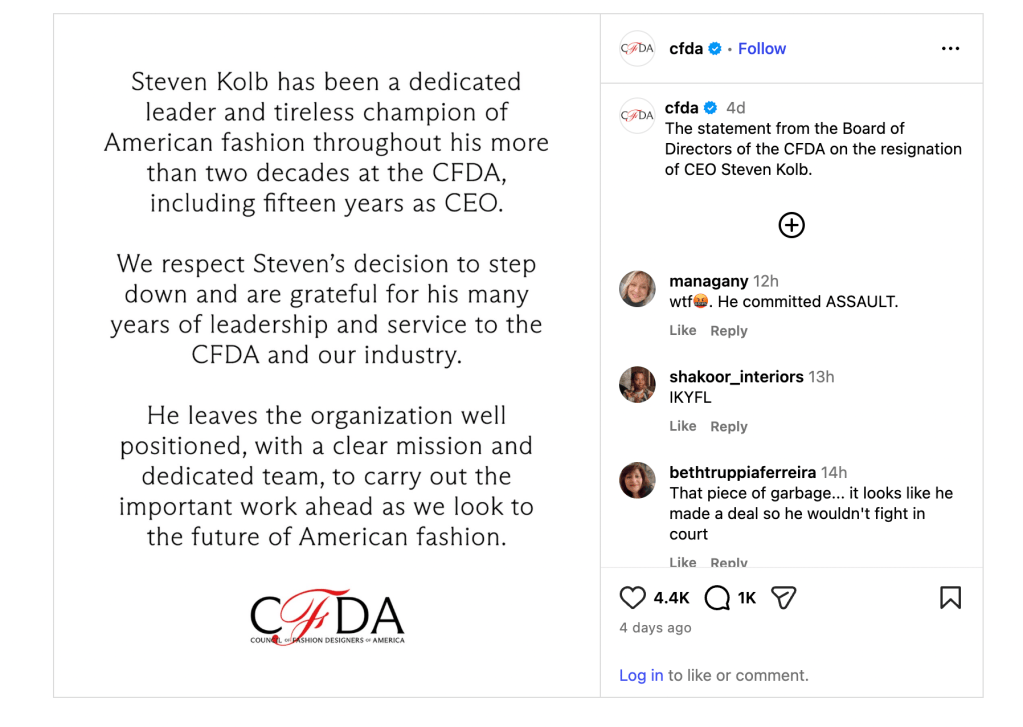
This type of visibility creates a complicated environment for fashion brands. Consumers have greater access to information about materials and sourcing than ever before, while social media allows criticism to spread almost immediately. As a result, companies have to consider how their material choices and business practices may be interpreted beyond the runway or retail floor.
The Changing Meaning of “Responsible” Fashion
The conversation surrounding wool also demonstrates that ethical fashion does not always have a simple definition. H&M Group’s position that its wool is responsibly sourced represents one side of the discussion, while PETA’s criticism of wool production represents another.
This creates an important distinction between what a company considers responsible sourcing and what consumers or advocacy groups consider responsible sourcing. Certifications and sourcing standards can provide companies with ways to demonstrate that they are following established requirements, but they do not necessarily prevent criticism from groups that disagree with those standards.
For the fashion industry, this means that transparency has become increasingly important. Consumers can question where materials originate, how animals are treated, and whether sustainability or ethical claims accurately reflect production practices. A brand’s response to those questions can become just as important as the original controversy.
Why This Matters to the Fashion Industry
The COS protest reflects a larger shift in the relationship between fashion brands and the people who purchase from them. Ethical and environmental concerns can now enter the fashion conversation through multiple channels, including protests, social media, journalism, and consumer activism.
This does not mean that every consumer will make purchasing decisions based on animal welfare. Fashion consumers have different priorities, and factors such as price, design, quality, and personal preference continue to influence purchasing decisions. However, ethical concerns have become another factor within the fashion environment that companies increasingly have to navigate.
For fashion brands, the challenge is balancing creative direction and consumer demand with growing expectations surrounding responsibility and transparency. A material decision that may once have been viewed primarily through the lens of design or quality can now also be examined through its environmental and ethical implications.
The COS incident at New York Fashion Week shows how these issues can quickly move from a fashion show into a broader industry discussion. As awareness of animal welfare and responsible sourcing continues to grow, the relationship between ethical practices, consumer perception, and brand identity will remain central to the fashion industry.
Fashion has always reflected changes in society, and growing attention to animal welfare is another example of that relationship. The question is no longer only what fashion looks like, but also what stands behind the materials, practices, and decisions that create it.
References:
https://www.instyle.com/peta-protestors-crash-cos-runway-show-new-york-fashion-week-12119331
https://www.vogue.com/article/clash-between-cfda-and-peta-protestors-disrupts-nyfw




Leave a Reply