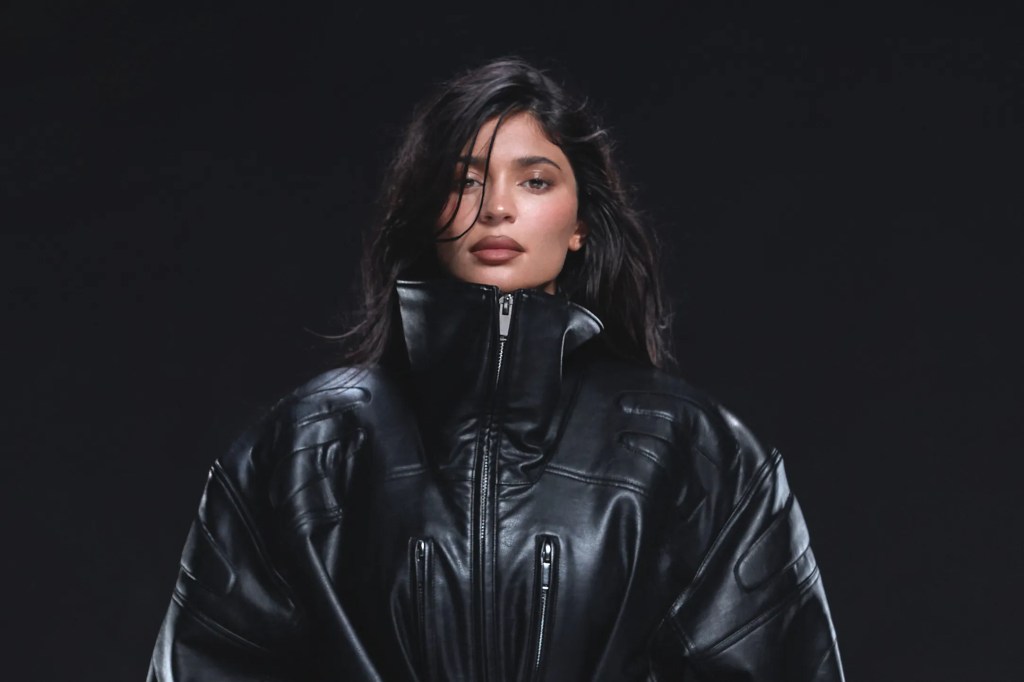
When Kylie Jenner launched Khy in November 2023, she introduced the brand wearing a $198 black “vegan leather” trench coat. The image immediately communicated the brand’s positioning: fashion-forward, accessible and animal-free. Khy’s first 12-piece collection was made almost entirely from faux leather, putting an increasingly popular material at the center of the brand’s identity.
But the material also created an uncomfortable question for the fashion industry:
What if replacing animal leather with plastic does not actually solve the sustainability problem?
The answer is more complicated than simply choosing between “real” and “vegan” leather. For fashion executives, designers and product developers, the larger issue is how a material performs across its entire life cycle—from raw material sourcing and manufacturing to durability, disposal and potential biodegradability.
The Khy example demonstrates why the word vegan cannot automatically be treated as synonymous with sustainable.
Khy Made the Material Part of the Conversation
Khy’s launch provides a useful case study because the brand entered the market at the intersection of celebrity influence, affordability and sustainability-conscious consumer culture.
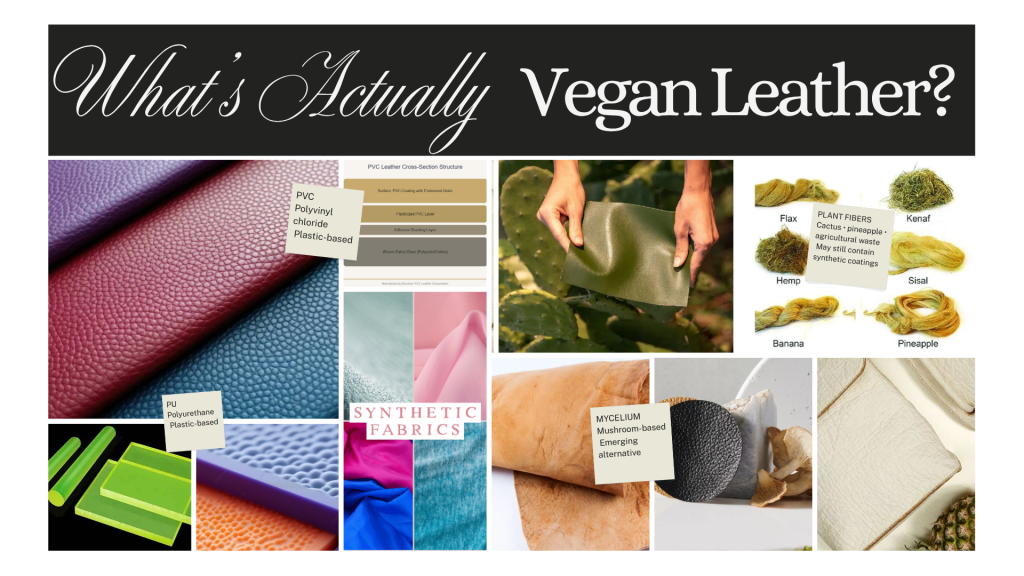
The first collection, released in November 2023, consisted of 12 pieces made almost exclusively from faux leather. The collection included pieces such as a trench coat, cropped jacket and mini dress. The Guardian’s Tamsin Blanchard examined the launch while questioning the environmental logic behind the growing popularity of faux leather. The concern was not that Khy used animal-free material. Rather, it was that many faux-leather products are made from fossil-fuel-based plastics such as polyurethane (PU) and polyvinyl chloride (PVC) (Blanchard, 2023).
That distinction is important.
A material can be vegan because it contains no animal-derived components while still being environmentally problematic because of how it is produced and what happens to it after use.
The New York Times made a similar point in its 2022 examination of the fashion industry’s growing reliance on synthetic materials. Hiroko Tabuchi reported that petroleum-based materials such as synthetic leather had increasingly been reframed under more appealing language such as “vegan leather” (Tabuchi, 2022).
For a fashion executive, this creates a material-transparency problem.
If a consumer sees “vegan leather” on a product page, they may reasonably interpret that label as a signal of environmental responsibility. But the word itself does not answer the questions that matter most to product development:
- What is the material made from?
- Is it fossil-fuel based?
- What chemicals are required during production?
- How durable is it?
- Can it be repaired or recycled?
- What happens when the product reaches the end of its useful life?
Those questions move the conversation from marketing language to material performance.
The Problem With Plastic Leather
According to The Washington Post, most conventional faux leather is made from either polyurethane or PVC—both forms of plastic. PVC is particularly concerning because its production, use and disposal can release toxic chlorine-based chemicals. Polyurethane avoids some of PVC’s problems but is still a petrochemical-based plastic (Chiu, 2024).
This creates a significant contradiction for the fashion industry.
Synthetic leather was originally attractive because it could reproduce the appearance of leather without using an animal hide. However, replacing an animal-derived material with a fossil-fuel-derived material does not automatically create a lower-impact product.
A 2023 systematic review by Tewari et al. examined different types of vegan leather and specifically addressed the industry’s challenges with sustainability, circularity and biodegradability. The authors emphasize that the environmental performance of vegan leather depends heavily on its composition and processing rather than simply on whether it is animal-free (Tewari et al., 2023).
Kefale et al. (2023) similarly explain that PU- and PVC-based leather alternatives can reduce some of the social and environmental concerns associated with conventional leather production, but they remain fossil-fuel-based and generally face the same end-of-life limitations associated with plastics.
This is where the fashion industry’s material choices become more complicated.
The goal should not be to replace one problematic material with another simply because the second one has a better label.
Sustainability Starts With the Entire Life Cycle
Raw Materials → Manufacturing → Performance → Consumer Use → End-of-Life
Each stage creates different environmental considerations.
1. Raw Materials
Where does the material originate?
Animal leather begins with livestock hides, while conventional synthetic leather often begins with fossil-fuel-derived polymers. Newer alternatives can use agricultural waste, plant fibers, bacterial cellulose or mycelium.
2. Manufacturing
How much energy, water and chemical processing are required?
Traditional leather production involves tanning and finishing processes that can create chemical waste if not properly managed. Synthetic leather eliminates tanning but introduces plastic polymers and other chemicals into the manufacturing process (Kefale et al., 2023).
3. Performance
How well does the material perform?
Fashion cannot separate sustainability from functionality. If a material cannot withstand repeated wear, consumers may replace the product more frequently.
4. Consumer Use
How long will the product remain in someone’s wardrobe?
A durable garment that remains in use for years may have a different environmental profile than a cheaper product that cracks, peels or needs to be replaced quickly.
5. End-of-Life
What happens when the consumer no longer wants it?
This is one of the biggest challenges facing plastic-based leather. The Washington Post notes that recycling faux leather can be complicated and is not widely practiced. Synthetic materials also do not biodegrade in the same way as natural materials (Chiu, 2024).
For executives, this means sustainability cannot be evaluated at the point of purchase alone.
Durability Changes the Equation
One of the most interesting parts of the leather debate is durability.
Leather has been used for centuries partly because it can be extremely durable. Well-maintained leather products can remain functional for decades. Synthetic leather, depending on its construction, can eventually peel, crack or chip (Chiu, 2024).
This does not mean that genuine leather is automatically the more sustainable choice. Traditional leather also carries significant environmental concerns, including livestock impacts, tanning chemicals, water use and waste.
Instead, durability introduces a more important question:
How long will the product actually remain useful?
For product developers, this matters because a material’s environmental impact cannot be considered separately from product longevity.
A lower-impact material that lasts two years may not necessarily be the better choice if a more durable material lasts twenty years.
This is why life-cycle assessment is becoming increasingly important in material selection. Rather than focusing on a single environmental metric, life-cycle thinking evaluates impacts across multiple stages of a product’s existence.
“Plant-Based” Does Not Automatically Solve the Problem
The fashion industry is already looking beyond conventional PU and PVC.
Companies and researchers are experimenting with alternatives made from mushrooms, cactus, pineapple, agricultural waste, bacterial cellulose and other bio-based materials. These innovations are promising because they have the potential to reduce reliance on fossil-fuel-based plastics (Kefale et al., 2023).
But even here, executives should resist another easy label.
Plant-based does not automatically mean sustainable.
Some bio-based leather alternatives still require synthetic coatings or binders to improve durability, water resistance or flexibility. As a result, a material can begin with a renewable resource but still contain a significant synthetic component.
The challenge for product development is therefore not simply finding a material that sounds sustainable.
It is finding one that can satisfy performance, scalability, aesthetics, cost and environmental objectives simultaneously.
What Does Better Innovation Look Like?
One promising example is mycelium-based leather.
Williams et al. (2022) conducted a life-cycle assessment of MycoWorks’ Reishi™, a mycelium-based leather alternative. The researchers found that Reishi™ contained less than 1% polymer in the material studied and could achieve a substantially lower carbon footprint than the modeled bovine leather benchmark. In the modeled full-scale scenario, the mycelium-only material had a carbon footprint of 2.76 kilograms of CO₂-equivalent per square meter, compared with 32.97 kilograms for the study’s bovine leather benchmark.
The researchers also emphasized that these results were specific to the case study and should not be generalized to every animal leather product or every mycelium material (Williams et al., 2022).
That qualification is exactly what makes the study valuable for fashion executives.
The future is not about finding one material that can be declared “the most sustainable.” It is about using evidence to determine which material performs best for a specific product, application and life cycle.
The Executive Opportunity
The Khy example demonstrates the risk of treating material innovation as a branding exercise.
If “vegan leather” becomes a marketing shortcut for sustainability, brands may unintentionally communicate a stronger environmental claim than their material can support.
Instead, fashion executives can use material transparency as a competitive advantage.
Five questions should guide leather-alternative decisions:
- Composition: What percentage of the material is biological versus synthetic?
- Environmental impact: What does the life-cycle assessment show?
- Durability: How does the material perform after repeated use?
- Circularity: Can the product be repaired, reused or recycled?
- Transparency: Can the brand clearly explain what the material actually is?
This approach also changes how fashion companies communicate with consumers.
Instead of simply saying “vegan,” brands can explain whether a material is PU-based, bio-based, mycelium-based, recycled, biodegradable or designed for a specific end-of-life pathway.
That level of specificity gives consumers more meaningful information and protects brands from oversimplifying complex environmental claims.
The Future Is Not “Real vs. Vegan”
The fashion industry’s leather debate is often presented as a simple choice:
Animal leather or vegan leather?
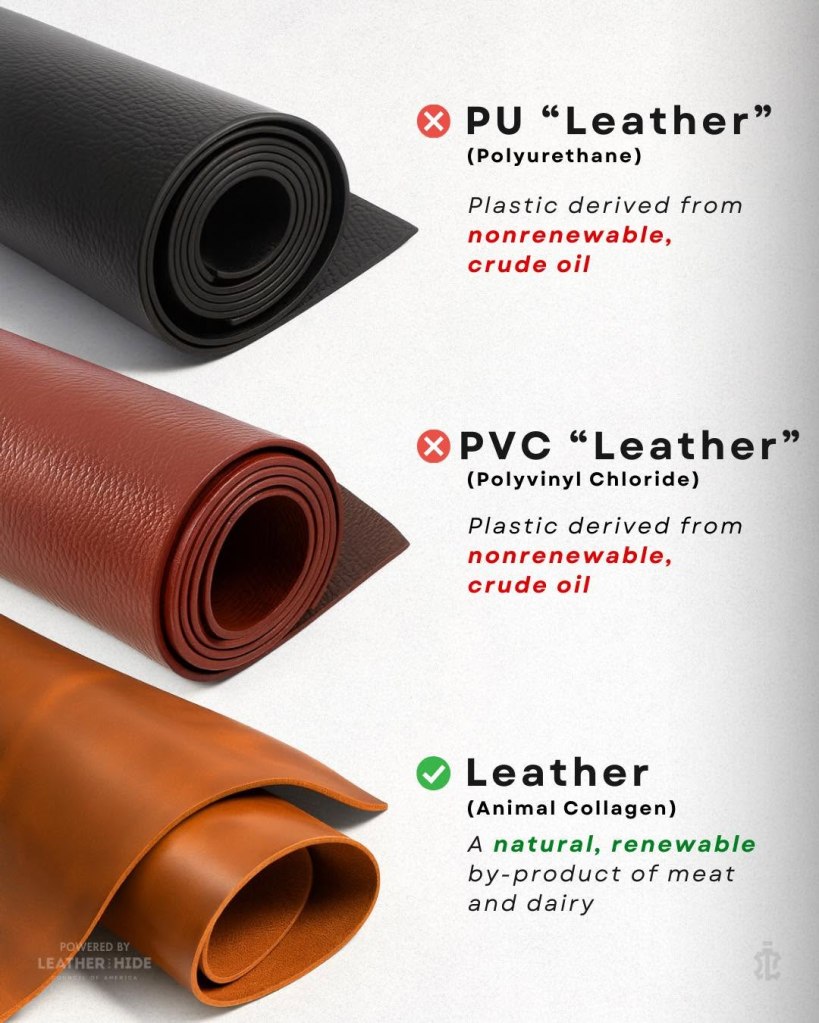
That framing is becoming outdated.
Both categories contain materials with different environmental strengths and weaknesses. Traditional leather can involve livestock emissions, chemical-intensive tanning and water pollution. Conventional faux leather can rely on fossil fuels, plastics and difficult end-of-life pathways. Bio-based alternatives may offer promising solutions but still face questions surrounding durability, scalability, coatings and commercial production.
The more productive question is:
Which material creates the best balance of performance, durability and environmental impact for the product’s entire life cycle?
That is a much more useful question for the future of fashion.
Khy’s launch made one thing particularly clear: material choice can become part of a brand’s story whether the company intends it to or not. In an industry where consumers increasingly scrutinize sustainability claims, executives cannot afford to evaluate materials based only on what sounds better on a product page.
“Vegan” tells us that a product is animal-free.
It does not tell us that the product is sustainable.
The next generation of leather alternatives should therefore aim for more than replacing animal leather. The real opportunity is to develop materials that are animal-free, lower-impact, durable, transparent and designed with circularity in mind from the beginning.
For fashion executives, that is the difference between changing the label and changing the material system.
References
Blanchard, T. (2023, November 22). “We are creating a material monster”: The false logic of faux leather. The Guardian.
Chiu, A. (2024, June 3). Is vegan leather more sustainable than animal leather? What to know. The Washington Post.
Hildebrandt, J., Thrän, D., & Bezama, A. (2021). The circularity of potential bio-textile production routes: Comparing life cycle impacts of bio-based materials used within the manufacturing of selected leather substitutes. Journal of Cleaner Production, 287, 125470.
Kefale, G. Y., Kebede, Z. T., & Birlie, A. A. (2023). A systematic review on potential bio leather substitute for natural leather. Journal of Engineering, 2023, Article 1629174.
Sustainability Nook. (n.d.). Real vs. vegan leather: Which is better for the environment?
Tabuchi, H. (2022, June 12). How fashion giants recast plastic as good for the planet. The New York Times.
Tewari, S., Reshamwala, S. M. S., Bhatt, L., & Kale, R. D. (2023). Vegan leather: A sustainable reality or a marketing gimmick? Environmental Science and Pollution Research, 31, 3361–3375.
Williams, E., Cenian, K., Golsteijn, L., Morris, B., & Scullin, M. L. (2022). Life cycle assessment of MycoWorks’ Reishi™: The first low-carbon and biodegradable alternative leather. Environmental Sciences Europe, 34, Article 120.
Images
Rock Uniquoters LLP. (2025, March 7). How is PVC leather made? A step-by-step guide. https://rockuniquoters.com/blog-details/how-is-pvc-leather-made-a-step-by-step-guide
Lūse, L. (2022, December 27). Projects using the potential of mycelium, a natural alternative to plastic. DesignWanted. https://designwanted.com/mycelium-alternative-plastic/
Love Your Leather. (n.d.). Pineapple leather: An eco-friendly alternative. https://www.loveyourleather.ca/leather-blog/pineapple-leather-an-eco-friendly-alternative/
Lin, J. M. (2022, May 9). Cactus leather: A complete guide to natural vegan leather. Handbagio. https://www.handbagio.com/cactus-leather-guide/
[Facebook group post]. (n.d.). Facebook. https://www.facebook.com/groups/hlifes/posts/1307558242985595/



Leave a Reply