For teen consumers, microtrends can offer creativity, community, and affordable self-expression. This offers real-time demand signals and faster sales. But when a trend can disappear before an order arrives, both groups have to ask whether the algorithm is serving personal style—or replacing it.
One week, TikTok declares that everyone needs a leopard-print coat. The next, the same print is treated as tired. A “coquette” wardrobe gives way to balletcore, office siren, mob wife, clean girl, indie sleaze, and another aesthetic that may not even have a name yet. The speed can be entertaining, but it can also feel exhausting—especially for teenagers, whose clothing choices often communicate identity, belonging, and social confidence before they have fully developed their own purchasing power.
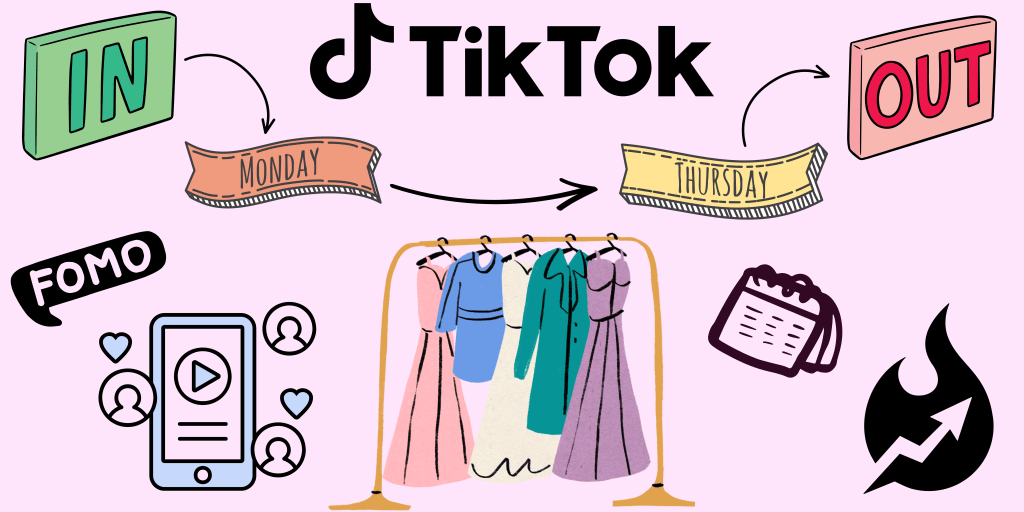
Teen fashion has always changed quickly. What is different now is that social media has compressed the trend cycle. A look can move from an influencer’s video to thousands of shopping carts in hours, and ultra-fast-fashion companies can respond almost as quickly. This creates opportunity for fashion businesses and greater choice for young consumers. It also creates a system in which clothing can feel outdated long before it is worn out.
That tension is the real story of teen apparel today: TikTok gives teenagers more ways to experiment with who they are, while algorithms, influencers, and retailers increasingly influence what that experimentation looks like.
Teen Apparel Has Never Been Just About Clothes
For teenagers, an outfit can operate like a social language. It communicates music taste, interests, group membership, gender expression, cultural identity, and the level of attention someone pays to what is considered current. This does not mean every teen mindlessly follows trends. It means clothing carries unusually high social stakes during a stage of life when people are testing identities and comparing themselves with their peers.
Social media intensifies that process by expanding the peer group beyond classmates and celebrities to an endless feed of creators, micro-influencers, and carefully edited lives.
Research helps explain why this content can feel so persuasive. In a study of adolescents, Lou and Kim found that perceived similarity, influencer credibility, and parasocial relationships—one-sided emotional bonds that followers form with online personalities—were associated with materialistic attitudes and purchase intentions. An influencer does not have to feel like a distant celebrity. She can feel like a stylish friend giving advice, even when the recommendation is sponsored.
That perceived friendship is commercially powerful. A conventional advertisement says, “Buy this top.” A relatable creator says, “You need this top; here is how I styled it; it is linked in my bio.” The second message is more personal, more entertaining, and easier to imitate.
From Seasonal Trends to Microtrends
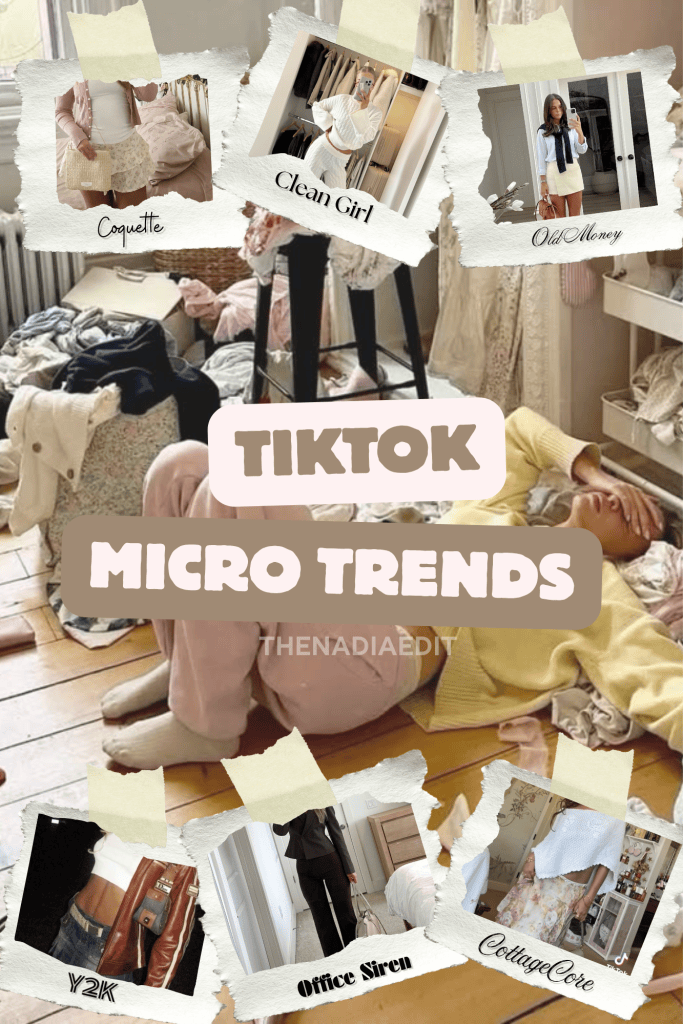
Traditional fashion businesses once planned primarily around seasons. Trend forecasting, design, sourcing, manufacturing, and distribution could take months. TikTok does not operate on that schedule. Its recommendation system continually promotes content that receives strong engagement, allowing a highly specific look to spread before traditional retailers finish planning their next assortment.
The result is the microtrend: a recognizable aesthetic or product that attracts intense online attention but may have a very short cultural life. In “Trend Overload,” Callie Holtermann describes how the constant churn of internet aesthetics is tiring many members of Gen Z. Young consumers understand that social media and fast fashion keep them buying, posting, and discarding, yet awareness does not completely remove the pressure to participate.
Microtrends can be playful, giving teens a vocabulary for experimentation and helping niche communities find one another. The problem begins when each new identity seems to require an entirely new wardrobe.
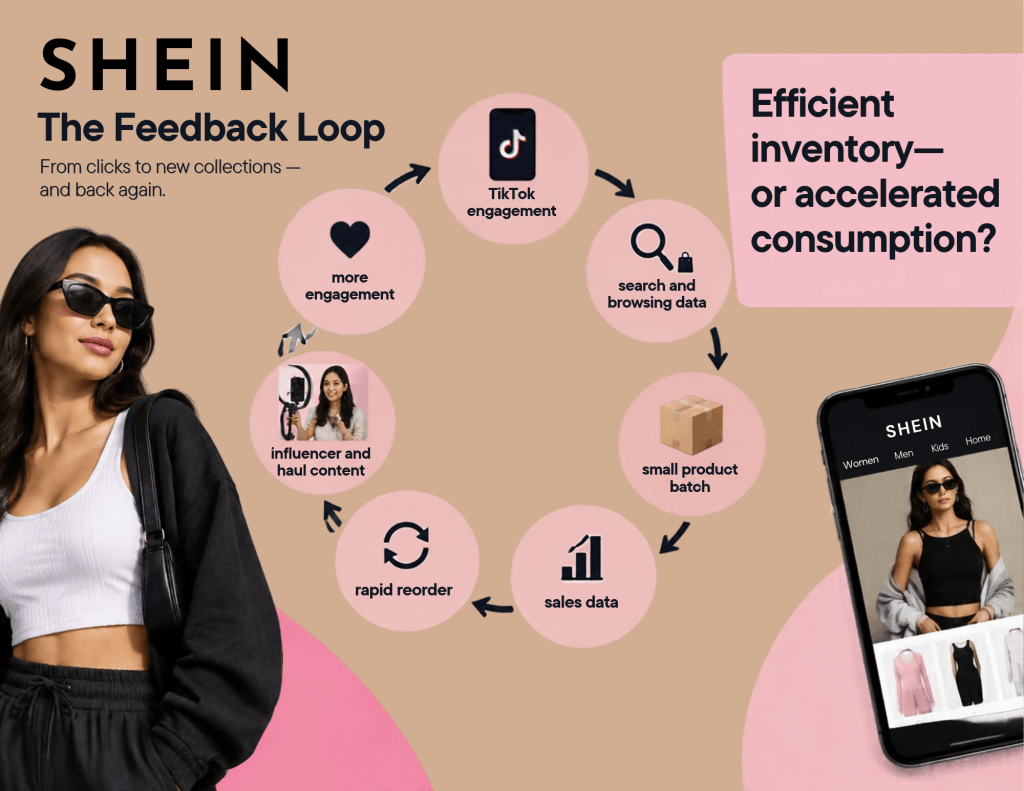
Fear of missing out, or FOMO, makes that pressure stronger. Limited-time discounts, countdown clocks, “selling fast” notices, influencer hauls, and thousands of comments create the impression that waiting means losing both the product and the chance to belong. A 2026 study of Generation Z and ultra-fast fashion found that FOMO had a significant positive relationship with intentions to purchase unsustainable ultra-fast-fashion products. The urgency is not only practical; it is social.
SHEIN and the Business of Real-Time Fashion
SHEIN is one of the clearest examples of a company built for this environment. As The Wall Street Journal reported, the company attracted American teens and twenty-somethings through extremely low prices, constantly changing inventory, and partnerships with influencers and celebrities.
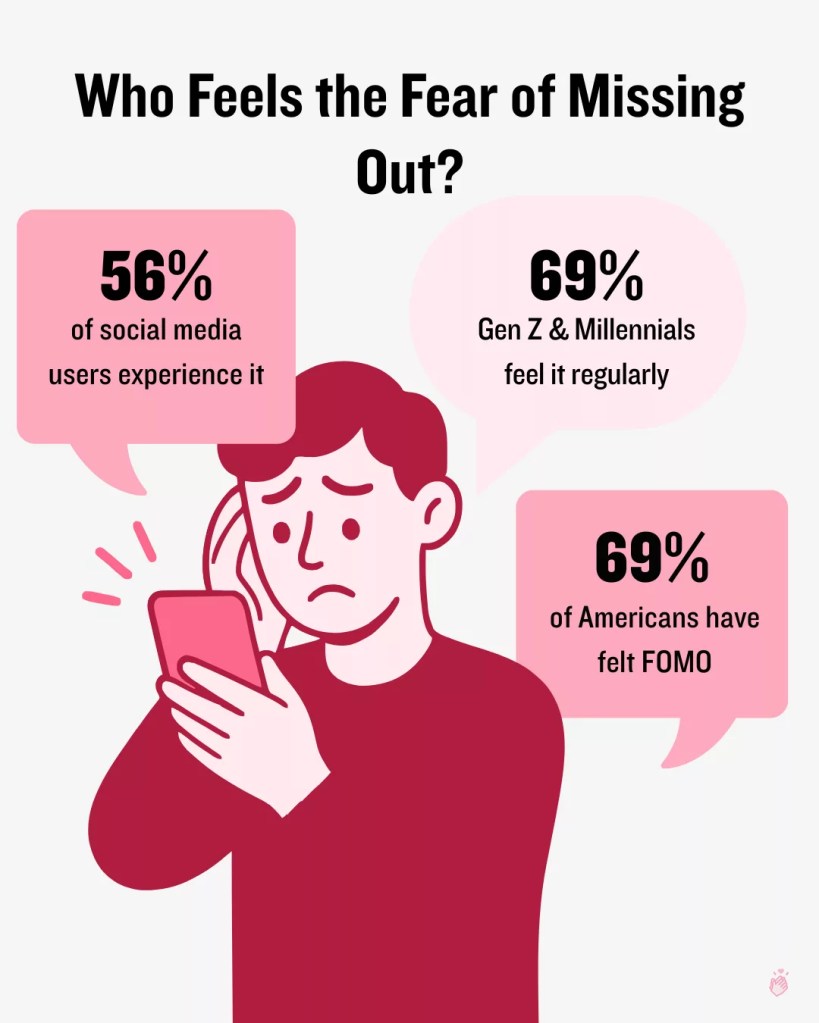
Its advantage is not simply that it sells inexpensive clothing. SHEIN connects digital marketing, consumer data, product testing, and supply-chain speed. Rather than committing immediately to a large order of every design, the company can introduce products in smaller batches, measure consumer interest, and reorder styles that perform well. The Harvard Business Publishing case on SHEIN presents technology and a responsive supply chain as central to its growth.
Small test orders can reduce the risk of holding thousands of unwanted units. Engagement data can reveal shifts in color, silhouette, print, and styling. Rapid replenishment can capture demand while a trend is still culturally relevant.
However, inventory efficiency and consumer sustainability are not identical. A company may reduce unsold inventory per design while still encouraging customers to purchase more garments overall. When hundreds of new options appear continually, the shopping experience itself becomes a form of entertainment. Low prices reduce the pause that normally separates wanting an item from purchasing it.
For teen consumers with limited budgets, those prices offer genuine access. A teenager may be able to experiment with trends, find extended sizing, or assemble an event outfit without spending hundreds of dollars. It would be too simple to dismiss that benefit. Fashion has historically excluded consumers through price, sizing, location, and narrow definitions of taste.
But affordability can create a different cost when clothing begins to feel disposable. If a shirt costs less than lunch and belongs to a trend expected to disappear in two weeks, there is little economic or emotional incentive to repair it, restyle it, or keep it for years.
The Feed Is Also a Storefront
Teen shoppers do not experience brand-generated content, user-generated content, and influencer advertising as completely separate categories. They appear together in the same feed and often use the same visual language.
El-Shihy and Awaad studied 643 Gen Z consumers ages 16–28 and found that both brand-generated and user-generated social-media content positively influenced purchase intentions for sustainable fashion. Brand content had the stronger effect in their study, while engagement amplified both forms. Although the sample extends beyond teenagers, it shows why fashion companies invest in a combination of polished campaigns and relatable consumer posts.
User-generated content can reduce uncertainty. A try-on from someone with a similar body type and comments about sizing, appearance, or washing may provide information that a product photograph cannot.
The ethical problem is hidden persuasion. If a creator received payment, free products, discounts, affiliate commission, or another benefit, the audience should not have to investigate whether the recommendation is an advertisement. The Federal Trade Commission’s influencer guidance states that material connections between influencers and brands should be disclosed clearly and in a place viewers are likely to notice.
For teen-focused brands, legal compliance should be the minimum rather than the entire strategy. A faint “#partner” among many hashtags may technically communicate a relationship to some viewers, but responsible marketing should make the commercial purpose unmistakable. Young audiences deserve to know when enthusiasm is also part of a sales agreement.
What Responsible Teen Fashion Could Look Like
The answer is not to eliminate trends or expect teenagers to shop like adults with large incomes. Fashion is supposed to be enjoyable, and experimentation is a meaningful part of adolescence. The stronger solution is to build a system in which experimentation does not require constant disposal.
A teen brand can test a small fashion-forward capsule while maintaining durable core products that coordinate across seasons. Instead of treating every viral aesthetic as a complete identity, companies can show how one item works within several looks. Better fabric, stronger construction, accurate sizing, and clear care instructions can increase the garment’s useful life without removing its relevance.
Resale, repair, take-back, and peer-to-peer exchange programs can also keep teen customers connected to a brand after the first sale. These programs should be convenient and affordable, not presented as luxury services. A retailer could offer store credit for returned garments, visible repair tutorials, or styling content built around pieces from previous collections.
Marketing should move away from manufactured panic. “Only a few left” may produce an immediate conversion, but repeated urgency can weaken trust. Brands could instead communicate cost per wear, material quality, versatility, and realistic durability. They can partner with creators who repeat outfits and demonstrate personal style rather than only performing enormous hauls.
For consumers, the goal is not perfection. A simple pause can separate inspiration from pressure:
- Would I want this if it were not trending?
- Can I style it with at least three items I already own?
- Am I buying the garment or buying access to an aesthetic?
- Will I wear it after the trend’s name disappears?
- Is this truly affordable once quality and cost per wear are considered?
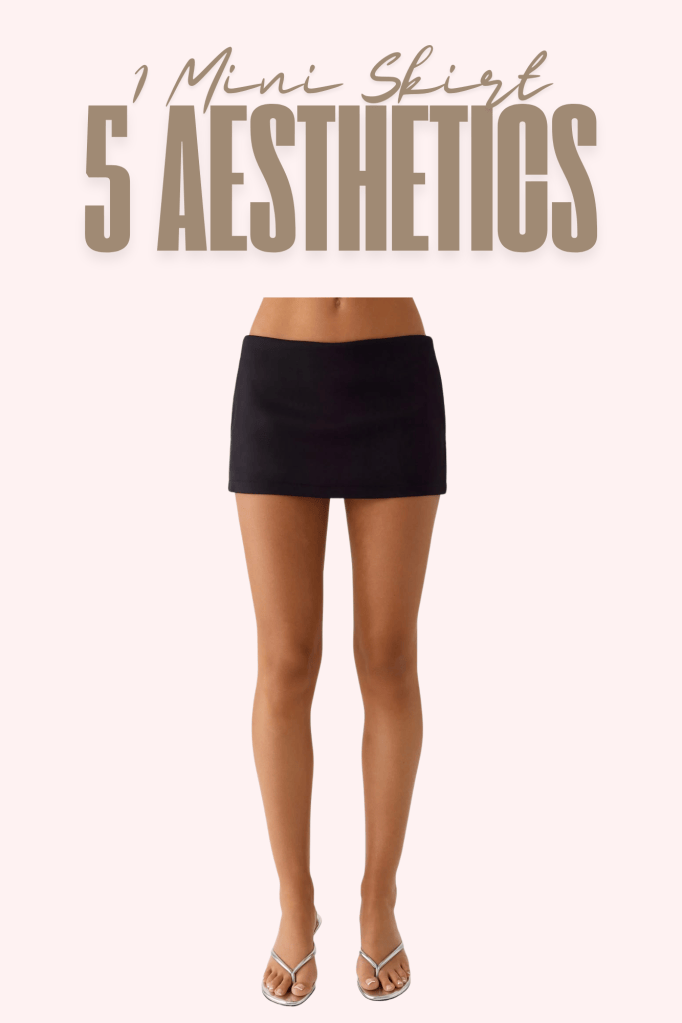
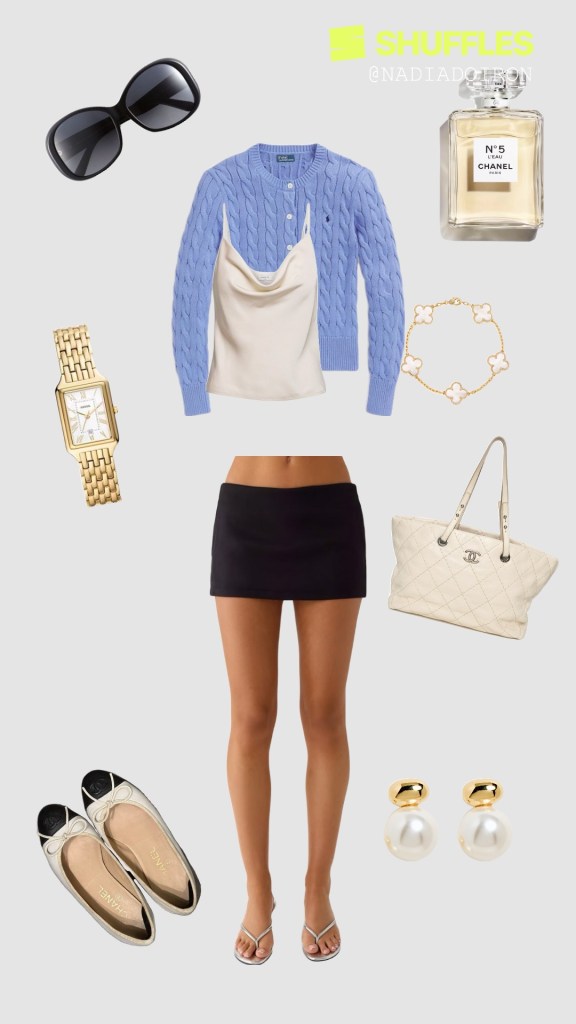
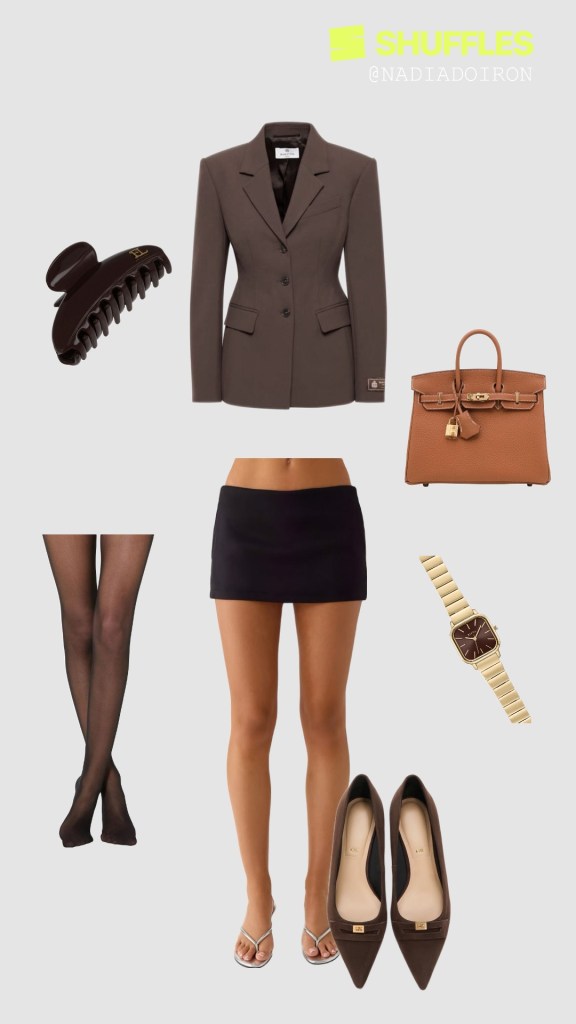
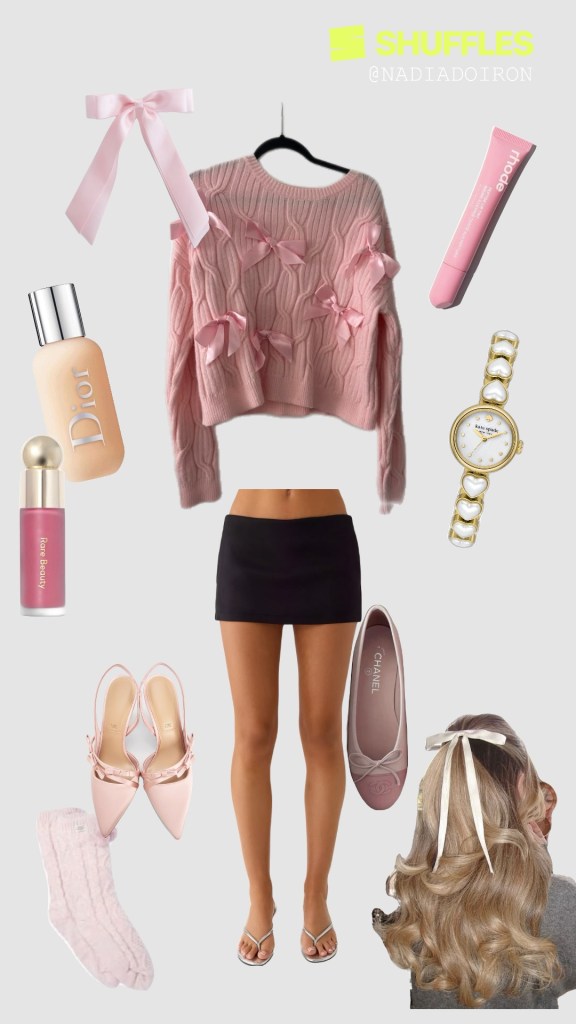
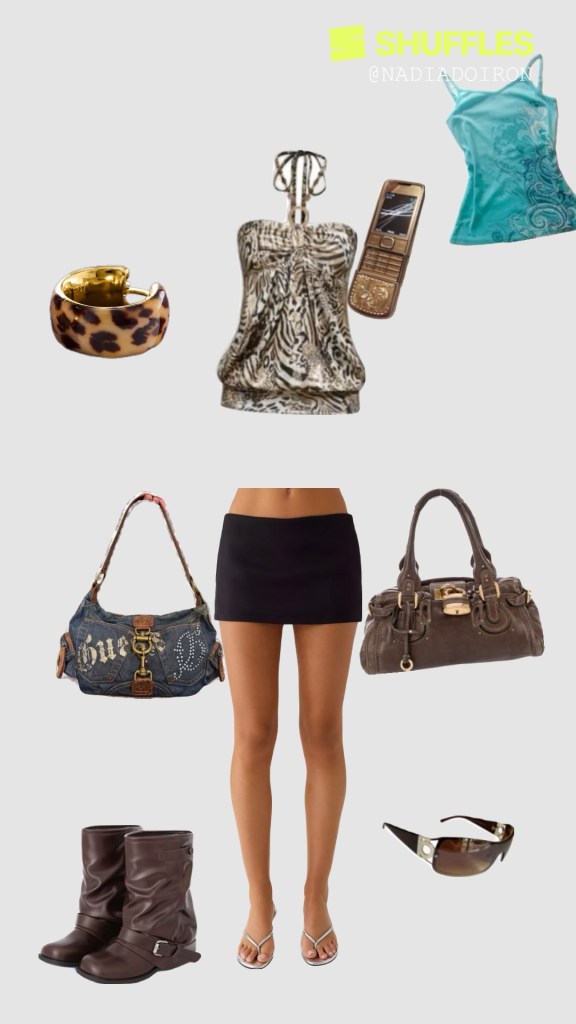
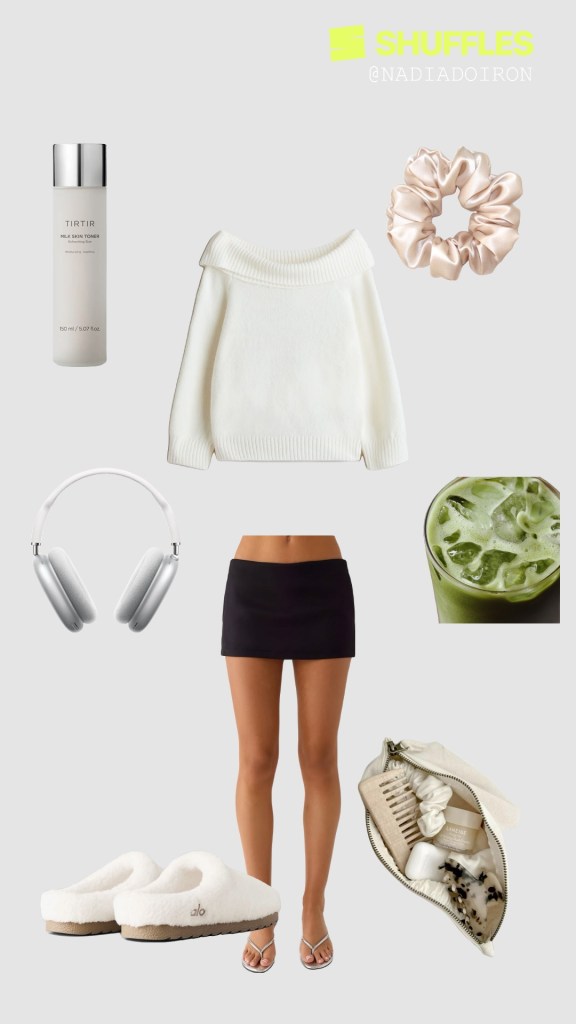
The same Black Mini Skirt but Dressed for different Aesthetics by Nadia Doiron on Shuffle
Personal Style After the Algorithm
TikTok did not invent trend pressure, influencer marketing, or fast fashion. It combined them in a system that learns quickly, circulates images constantly, and turns attention into sales with very little friction. SHEIN did not invent inexpensive apparel either, but its data-driven, small-batch model demonstrates how effectively a retailer can respond to that system.
The industry now faces a choice. Executives can use teen consumers’ data to chase every short-lived aesthetic, or they can use the same information to build relevant products with longer lives. Consumers can treat the feed as a list of instructions, or as a source of ideas that they edit through their own budgets, values, and identities.
Teen apparel should leave room for reinvention. It should not make teenagers feel that they must purchase a new identity every week.
The most valuable style question may no longer be “What is trending?” It may be: What do I still want to wear when the algorithm moves on?
References
El-Shihy, D., & Awaad, S. (2025). Leveraging social media for sustainable fashion: How brand and user-generated content influence Gen Z’s purchase intentions. Future Business Journal, 11, Article 113. https://www.researchgate.net/publication/391668490_Leveraging_social_media_for_sustainable_fashion_how_brand_and_user-generated_content_influence_Gen_Z’s_purchase_intentions
Federal Trade Commission. (2019). Disclosures 101 for social media influencers. https://www.ftc.gov/business-guidance/resources/disclosures-101-social-media-influencers
Harvard Business Publishing Education. (2022). Shein: An ultra-fast-fashion retailer’s digital strategies. https://store.hbr.org/product/shein-an-ultra-fast-fashion-retailer-s-digital-strategies/HK1378
Holtermann, C. (2025, March 9). Trend overload. The New York Times. https://www.nytimes.com/2025/03/09/briefing/tiktok-microtrends-gen-z.html
Lou, C., & Kim, H. K. (2019). Fancying the new rich and famous? Explicating the roles of influencer content, credibility, and parental mediation in adolescents’ parasocial relationships, materialism, and purchase intentions. Frontiers in Psychology, 10, Article 2567. https://pmc.ncbi.nlm.nih.gov/articles/PMC6872518/
Nguyen, L. T. T., Nguyen, T. T., & Pham, N. T. A. (2026). Exploring Generation Z’s unsustainable purchase intention towards ultra-fast-fashion products. Discover Psychology, 6, Article 65. https://link.springer.com/article/10.1007/s44202-026-00594-x
Xiao, E., & Moss, T. (2021, August 2). How Shein became the Chinese apparel maker American teens love. The Wall Street Journal. https://www.wsj.com/business/retail/how-shein-became-the-chinese-apparel-maker-american-teens-love-11627896600




Leave a Reply